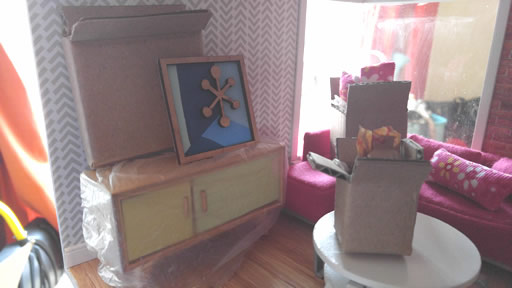
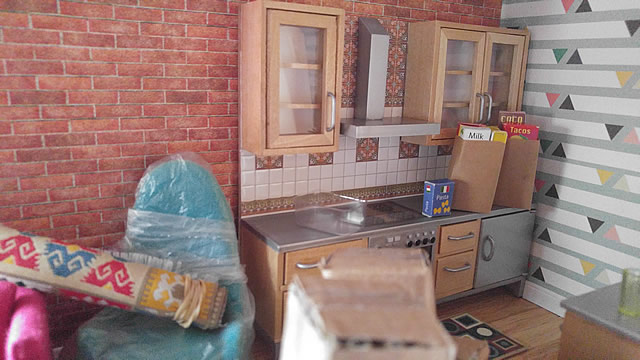
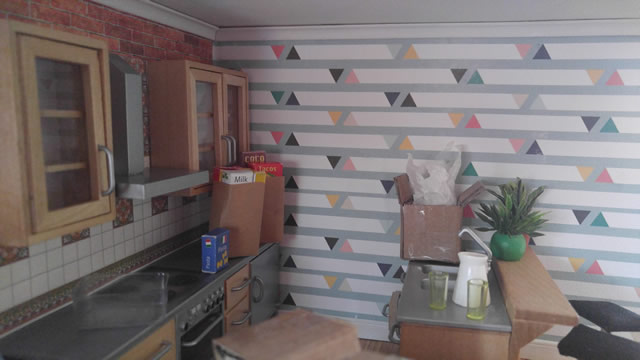
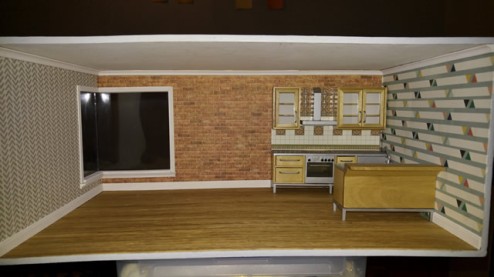
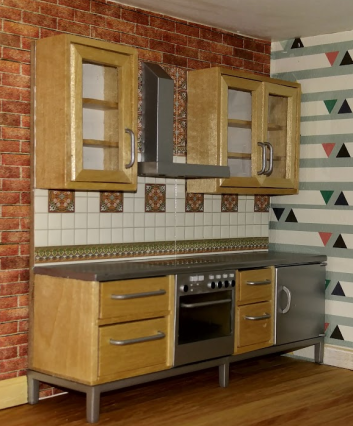
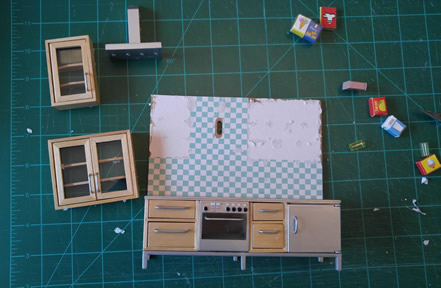
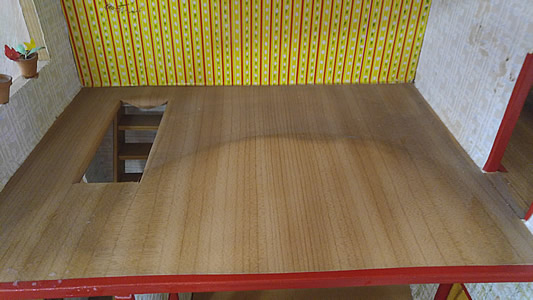
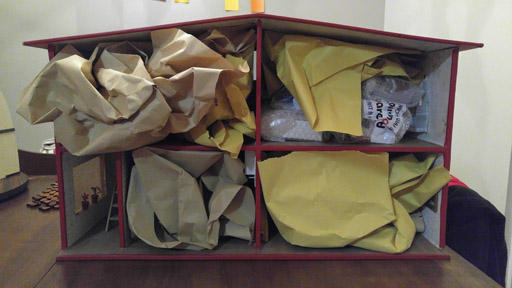
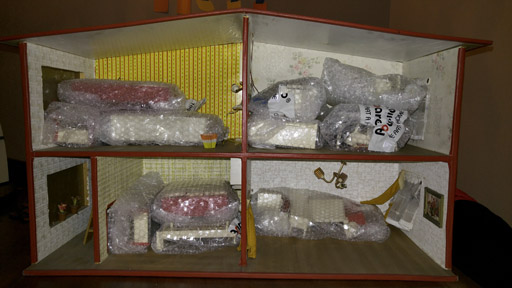
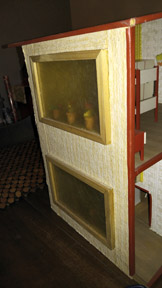
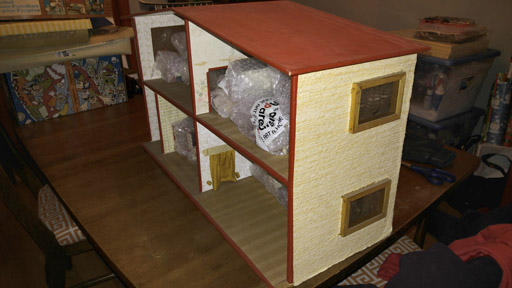
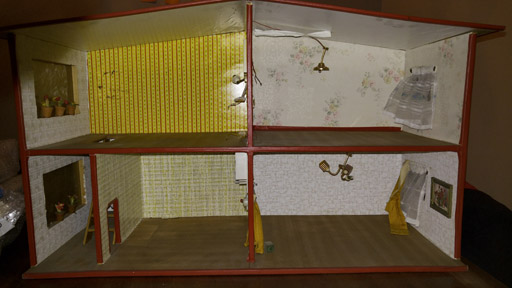
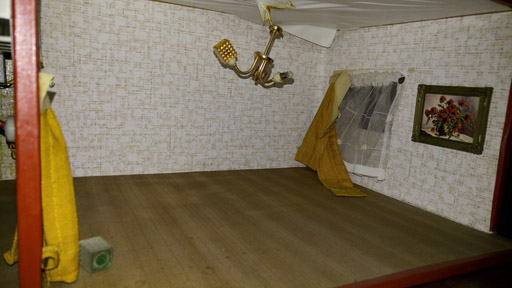
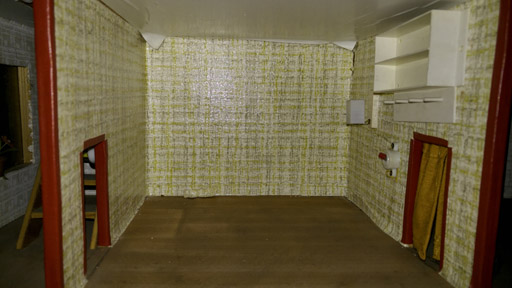
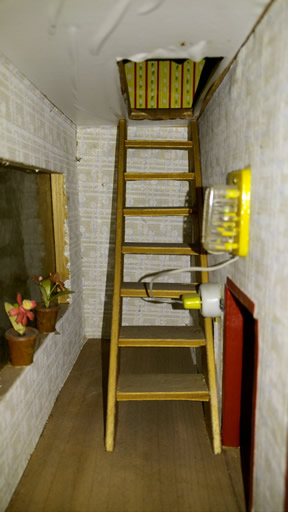
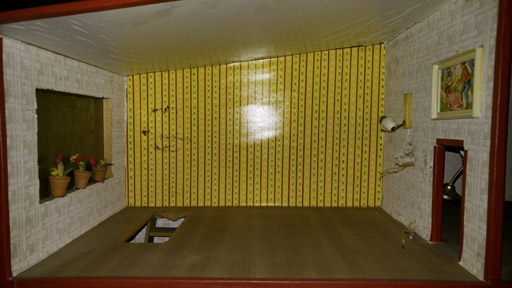
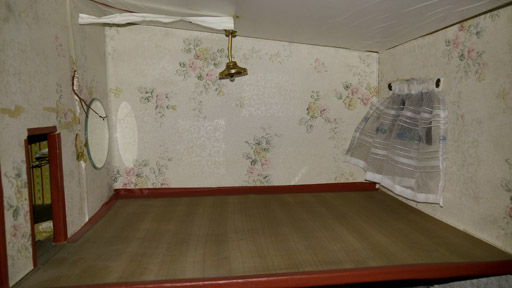
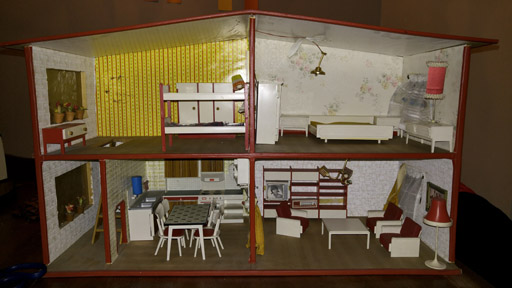
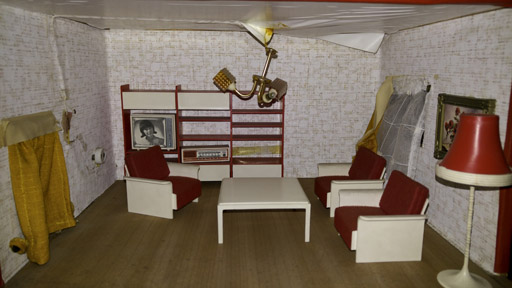
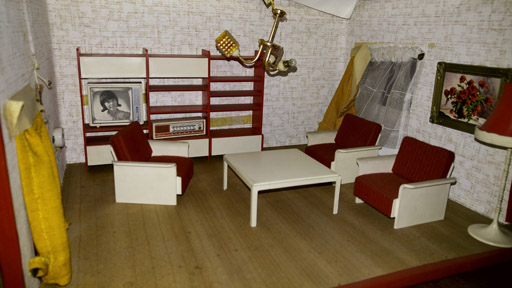
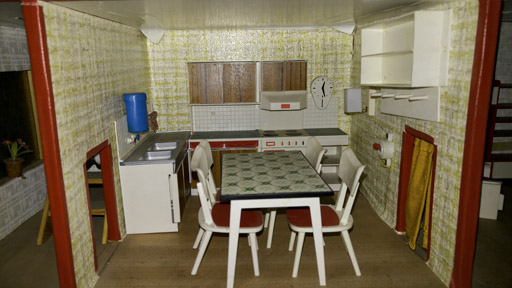
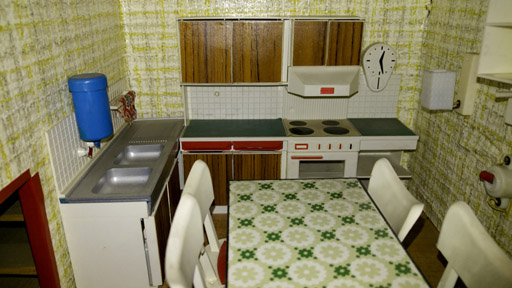
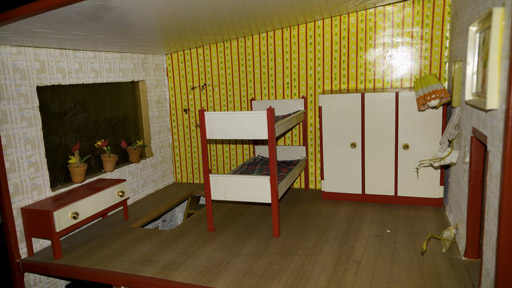
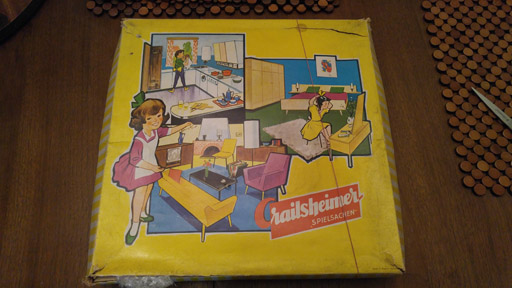
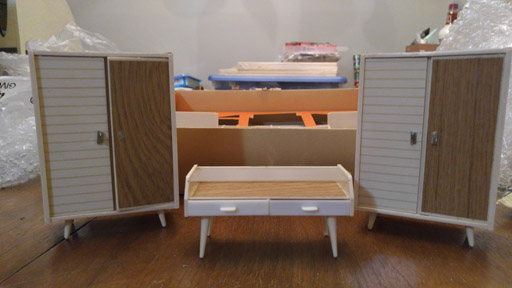
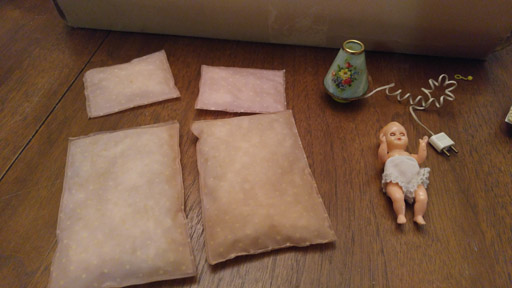
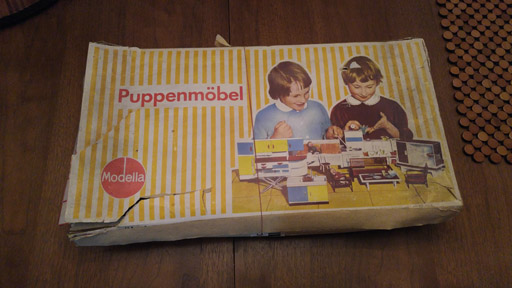
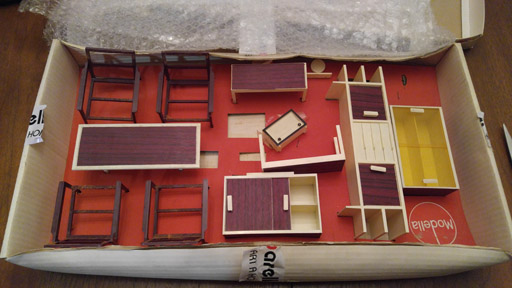
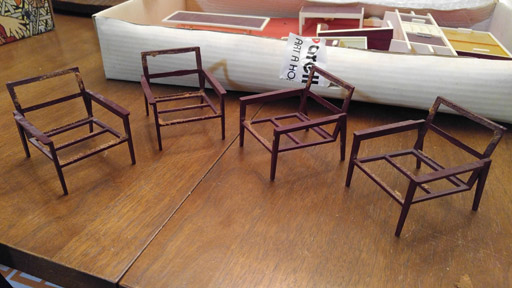
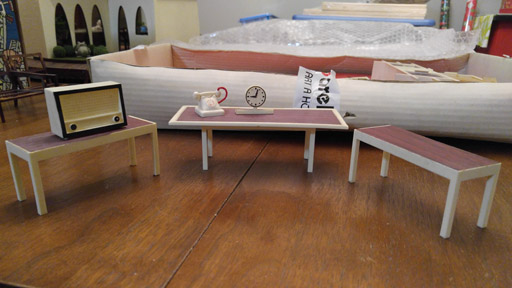
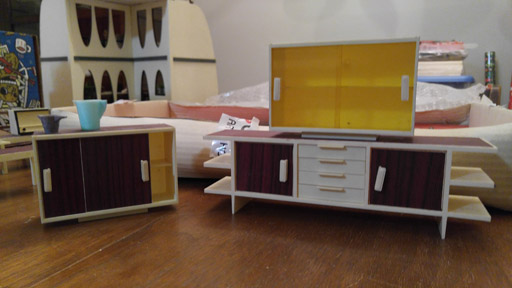
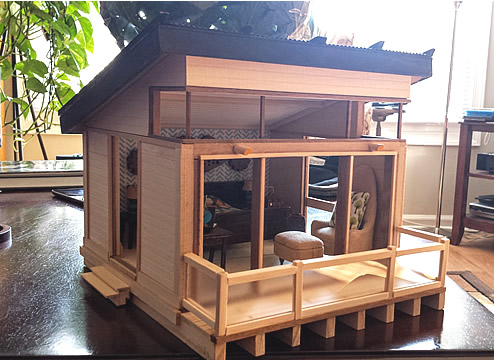
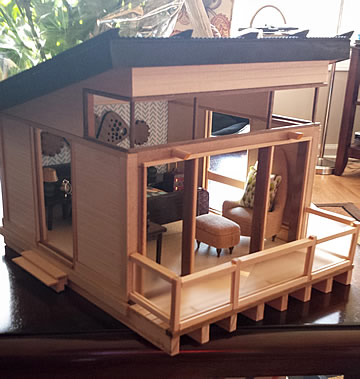
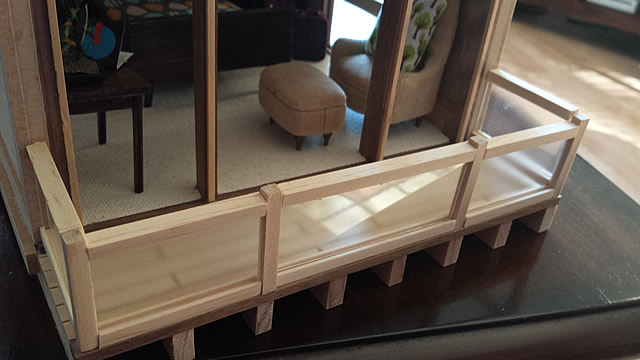
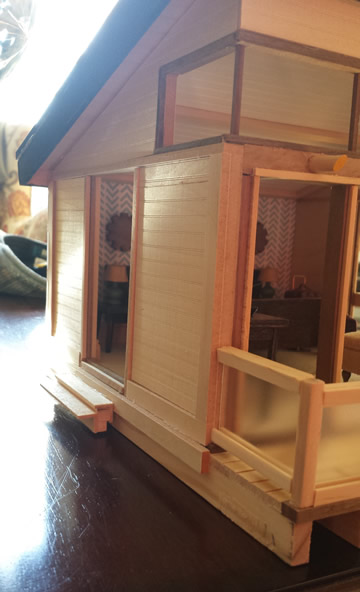
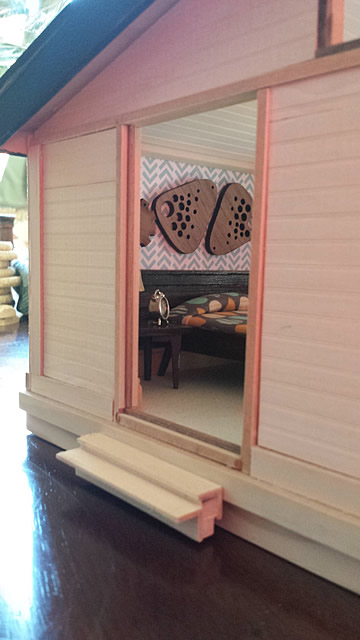
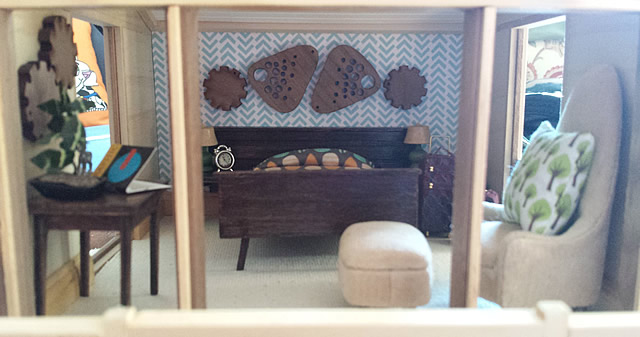
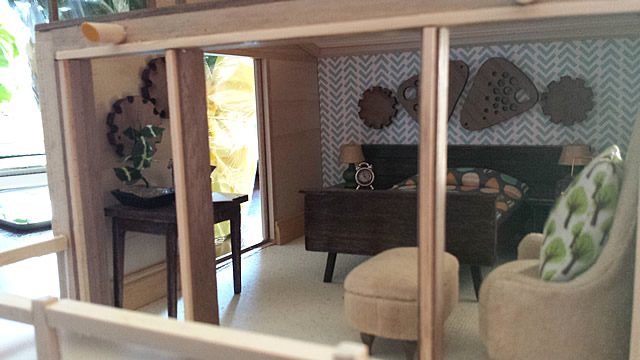
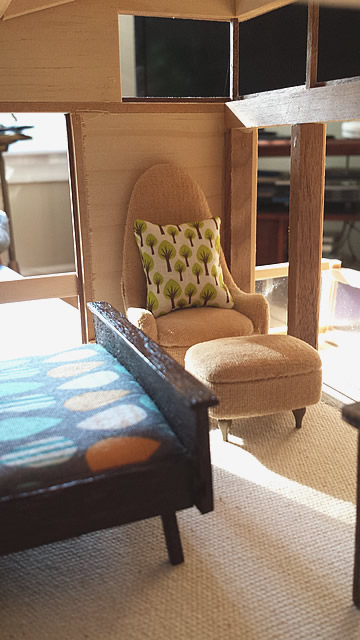
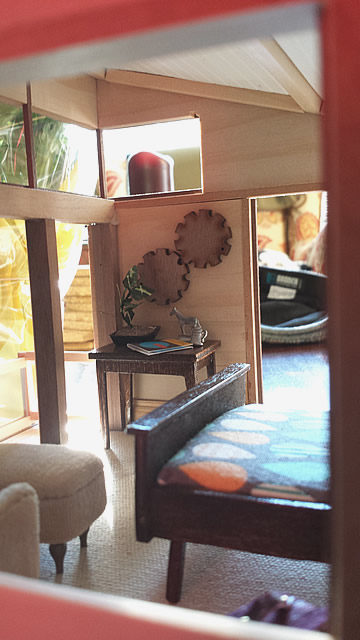
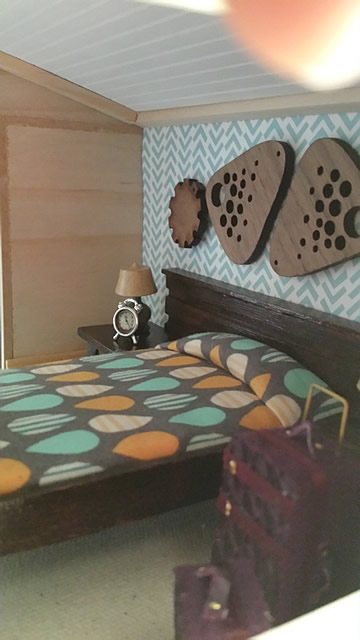
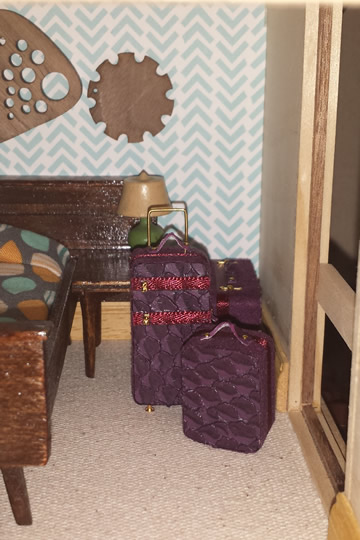
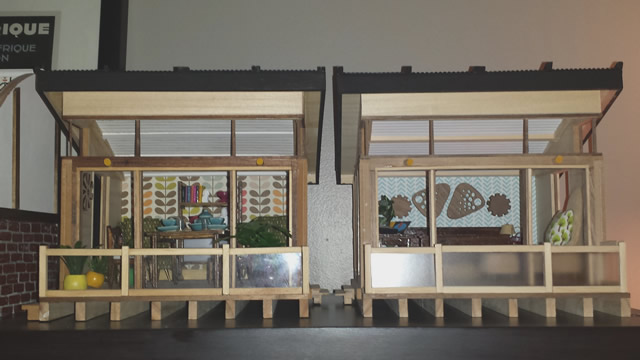
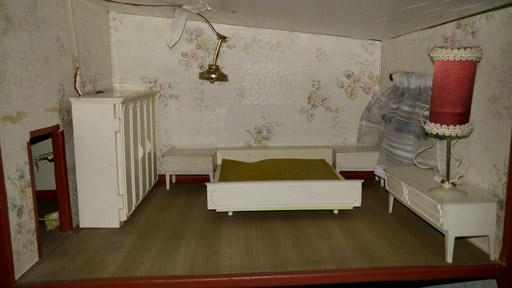
Considering that I still have my vintage A-Frame House (carefully stowed away on the shelving unit) waiting to be built, hopefully the following can be a type of appeasement to folks asking me when I’ll be building it.
Apparently someone on eBay is selling a vintage A-Frame house as well. It’s not the same as mine, but it’s pretty awesome looking nonetheless.
Will keep an eye out — though am hoping someone out there is going to put the winning bid. And make something super awesome out of it.
After another rambling entry regarding the wedding book I made, I ended with it a question: so whom amongst my (fast) growing group of mini dolls will be owning the book?
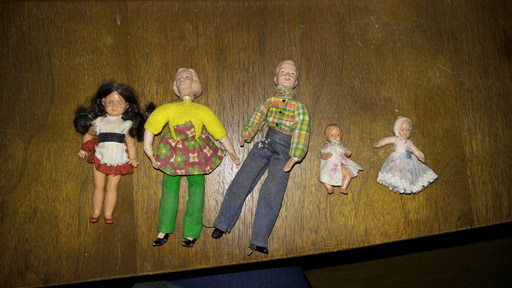
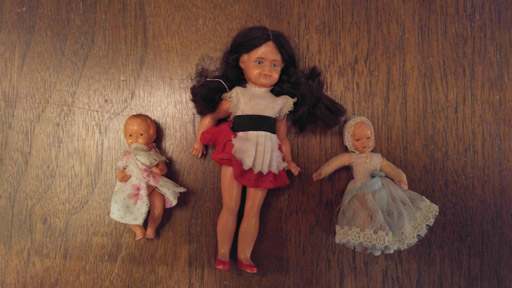
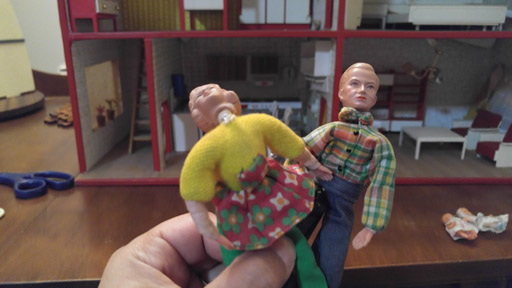
Well, that’s a pretty simple answer actually. Ladies and gentlemen — meet BK’s and my 1:12 scale counterparts.
There’s a bit of a story behind them. At least in terms of how I got them.
I got BK’s counterpart (Bryan) via an auction listing on eBay by an artisan from the UK. She was selling dolls she created and dressed in 1940s fashion. I almost wanted to laugh when I saw this doll because it had similar features to BK. For starters, the hair style looks exactly like my husband’s preferred haircut. And second, the sweater vest and checkered pants…if BK could, he’d wear that everyday. Assuming he’d find a place that carried those pants in his size!
Needless to say, I put a bid on him and luckily, won the doll. This was in late 2010…at this point, BK and I were engaged, and this doll was one of the very few mini-related purchases I made. Mostly to keep my sanity from the preparations. When I received him a few weeks later, I was thrilled at how detailed he was. Then I realized that I needed my counterpart to have the same dimensions as this doll. But at this time, the artisan was no longer selling items of eBay. So I was left thinking my poor male doll would be without a companion for awhile.
Fast forward to March 2012, and imagine my surprise when I saw a listing on a doll similar to mine on eBay. When I went to check the seller’s other listings, I was thrilled to realize that a) it was the same artisan and b) she was accepting custom orders. So I quickly sent an email, and before you know it, we were messaging back and forth on my custom doll. Theresa (the artisan) was super awesome — she kept me in the loop of my doll’s status, and even provided me photos to review before I submitted my payment. This time, I made sure to keep her contact info in case I needed additional orders.
Needless to say, by early April, I received my counterpart. Am really happy how she turned out — Theresa faithfully reproduced a 1960s wrap dress I saw in an old advertisement that I have adored. She even matched the color of the dress to use on the doll’s heels. Until I find that same exact dress in real life, at least my counterpart is wearing my fantasy outfit.
The only detail I need to add to them are glasses. BK wears a pair of rimless glasses that he adores, and I have my pair of black nerdy frames. I picked up some eyewear but they don’t look right on the dolls. So unless someone has suggestions, that’s another item on my to-do list. Assuming I finish the Primrose kit bash in time (more on that later).
So now that I have the mini counterparts completed, it’s time for them to look at their wedding book…and make plans to celebrate their 6 month anniversary somehow.
Yes, I’m aware that the above title is based on a B.o.B/Bruno Mars song. A song that I adore thank you very much. I mean, it’s got a good beat, and the lyrics are pretty sweet. What’s not to love right? Well, yeah, it also helps that they’re both cute (especially Bruno Mars – that smile of his is so darn charming)!
But figured this is an appropriate title for this entry, given that it has a little over 6 months since I married BK. So yes, I’m pretty happy to acknowledge that.
Since BK and I were unable to do much to celebrate this landmark (we both have to work long hours for most of the month), I wanted to at least do something to commemorate this event. Then it occurred to me — why not make a miniature photo book of the wedding? I mean, I made one for our families and key relatives. So why not make one for my (growing) brood of mini occupants?
When it comes to actually making one, I came across this particular online tutorial on making miniature books . It appears to be pretty simple in concept — you create pages using strips of paper folded accordian-style, then gluing it in turn on a precut “bookcover”. Sounds simple enough.
So I started by looking at the real-scale version of the wedding photo book I made for family. To make it easy on myself, I rounded to the nearest inch – so my real wedding photo book was about 12 inches wide x 9 inches tall, and about an inch thick. Since I’m working on 1:12 scale (1 inch = 1 foot), that meant that my miniature book needed to be about 1 inch wide x 3/4 inch tall. In terms of thickness, figured I’ll have to wait once I finish assembling the pages.
To create the pages, I used my Adobe Illustrator CS5 program to help me organize. I created an 8.5 inch x 11 inch document, then created 4 strips that were 3/4 inch tall each. Once the strips were created, I divided each strip to 1-inch increments to represent the individual pages. I used the Pen tool to make the guidelines visible — these are the areas where I’ll need to fold the strips to make the accordion shape.
Once the guides were installed, then began the painful task to inserting photos. When the wedding photographer BK and I hired (the ever talented Sarah of Sarah Culver Photography) provided the photos, there were over 700 shots. And as beautiful as they are (they still make me cry whenever I look at them), I had to limit which photos to use. The last thing I wanted was to make the photo book be so thick, it might as well be an encyclopedia.
To make sure the photos would still be clear enough to be seen in 1:12 scale, I used the original raw files the photographer provided (they were 241 dpi) and simply resized them to fit within the individual “pages”. I had to play around with various layouts and sizes for the selected photos to at least show a (condensed) story of the wedding. I even had pages where I wrote a little message of sorts — that pretty much required me to use some ridiculously small font sizes (like 2-3) and converting the text into outlines so they’ll print clear. For some weird reason, this was alot more of a challenge versus making the actual wedding photo book our families got over the holidays!
Once the photos and layout where finished (*insert fist pump moment here*), it was off to printing out the sheet. I couldn’t use cardstock because it’d be too thick once the strips were folded, and I was worried regular computer paper would be too thin. Decided to try a middle route and just use some leftover linen text paper from my wedding craft stash. It actually turned out really nice once I printed the file from Illustrator – it gave a crisp, parchment like look.
After printing it out, I used a ruler and bone folder and used the guides I created earlier to create creases. This to make sure that when I began folding the strips, they’ll fold neatly and as close to the same size as possible. After that, I cut the strips out, and started the folding process. This part is again pretty straightforward — you simply fold along the creases to create an accordion-like pattern.

My poor-ass attempt to explain how I made my strips of "pages" into a single (albeit long ass) chain.
Since I have four strips total, I had to basically string them together to form one long strip. The following graphic hopefully makes sense (if not, I did include a rough explanation):
The way I did that was at the end of each strip, the last “page” I had left intentionally blank. Each blank was then cut down to a panel of about 1/4″ wide, and used a good glue stick to apply adhesive on both sides. Then I attached that panel to the first panel of the next strip, eventually making that 1/4″ panel be sandwiched between the two panels from that new strip.
I kept repeating this step until all the strips were folded, attached, and glued. And the pages were officially done. To make sure the pile stays tightly knit, I smeared a thin layer of Elmer’s glue to create the book’s spine before clamping the book between two small blocks of wood. I wanted the glue to dry to a gummy layer.
I then cut a rectangular panel from a piece of index card long enough to form a stiff inner cover for the pages. I glued the gummy end of the spine to this card, then trimmed it to match the dimensions of the pages.
As for the book’s cover, I wanted to mimic the wedding photo cover I made. So I remeasured the dimensions of my new pages: it was still 1″ wide and 3/4″ tall. But because the strips made the book thicker than anticipated….I found out that the spine was actually 1/2″ thick — the equivalent of about 6 inches in real life. (&$#%^@# — I did make a bloody encyclopedia!!!)
So back to my trusty Illustrator program, I used the new measurements to figure out how big my photo cover needed to be. I basically created a rectangle that was 1/2″ wide and about 7/8″ tall (I added an additional 1/8″ to provide some wiggle room) to act as the cover’s spine.
Then flanking the spine, I drew a rectangle that was about 1 1/16 ” wide and 7/8″ tall to house the cover design, then a thinner rectangle (about 1/4″ wide) as the cover flaps. Hopefully this screen capture makes sense.
From here, I chose some more photos provided by my wedding photographer, then resized them to properly fit within the rectangles I created. Then I applied the titles and it was basically ready to be printed. In this case, I used some leftover photo paper from a long-ago project. I wanted the cover to have a sheen to it — plus just in case I spilled something on it, the stuff should slide off (and protect the inner pages).
After the design was printed, I cut out my cover, and used my bone folder to create the creases needed to fold it into its proper shape. Then I used a thin layer of Tacky glue to glue the cover to the card cover of my inner pages. Then it was back to getting clamped and weighed down until the glue was dry.
And there you have it — my wedding photo book.
I actually showed this to BK once everything was dried (I had to use a needle to “open the pages to make sure none of the pages got stuck together). He was pretty impressed — especially with the fact he was able to read the text I wrote in the last pages. Of course, he had to freak me out when he asked if I could make another wedding book to send to this parents. I sure hope he’s kidding about that! Plus, I hope my photographer doesn’t mind that I did this with her photos! >_<
Some sample pages (again, thank you Sarah Culver Photography for the beautiful photos!)
With the book now done, I was left with the kicker question: who will be the new owner of this said book?
With the shell now assembled — at least the first floor was glued — it was now time for the fun part – decorating the walls/ceilings.
I knew the house was going to be furnished to be something more on the modern/contemporary side but frankly, wasn’t sure what furnishings I was going to use. I did a recent purge of my minis (I gave away a couple of items some fellow GL forum members - thanks for helping me clear space off my bins of crap!), so will need to dig around and start picking them soon. But until that’s done, the wall and floor colors need to be flexible and neutral.
For the floors, I just resorted to using my favorite walnut wood planks. Never realized how many of these I bought before I got engaged. Guess in a way it’s good because it means it’ll be awhile before I officially run out of these planks (since the vendor on EBay doesn’t currently have them in stock). While I love how they look when installed, sanded, and varnished, finding the right adhesive is a bit of a challenge. I tried using regular carpenters/wood glue, but the planks just curled up because they’re so thin. I used QuickGrip in another project, which worked great — problem was that the stuff can get so darn expensive*. So that option was out.
(Update: Found out later that Stuff4Crafts.com and Hancock Fabrics actually sells QuickGrip pretty cheap. Ended up ordering a dozen of them to keep on hand. Yay!)
Then I read on the Greenleaf Forum that some folks used contact cementwhen installing flooring. Was initially hesitant because the stuff not only smells but it’s pretty flammable (yeah, last thing BK and I need is to make our apartment burst into flames). But then again, the small bottles are relatively inexpensive at my local Lowes. Why the hell not, I guess.
The verdict? It’s actually not bad.In fact, I actually think I found my adhesive of choice for the plank flooring. Granted, it does smell awful (definitely have your windows open when using this stuff. And wear a mask if you can handle it), and it’s a bit messy at first try. But so long as you work quickly in spreading the cement both on the floor AND the plank you’re installing, the stuff bonds them instantly. Though just to be sure, once I finished a whole floor, I covered it up with wax paper and stacked some heavy books on top. After 24 hours, I’ll peel off the wax paper and sand the flooring down before putting a couple coats of beeswax varnish.

Colors/patterns chosen for the Primrose. Paint colors are courtesy of Behr Paint. French Toile Blue is the property of the Dollhouse Emporium/DHEMinis.
Once the floor was done, I started taking measurements of the walls and ceiling for my wallpaper. To make this easy on me, I did not glue on the roof until the second floor was wallpapered. Especially since that area has a dormer that I’ll need to cover.
I really wanted the walls on the first floor to be a solid color. But because of the size of the Primrose, figured there’s no point buying paint to cover walls that small. And since there are very few solid colored wallpapers on the mini market (*cough* freakin’ BIG-ASS HINT *cough*), decided to just make my own using cardstock.
After checking out the Behr website and picking out the colors I wanted, I did a screen capture of my selections and basically used Photoshop to print them out on plain white cardstock. The purple color (“Gypsy Magic” – who comes up with these paint names anyway??) turned out great. But the coffee/cream color always looks grey whenever I took photos. Imagine that.
For the second floor, I wanted to use a blue floral wallpaper I bought from DHEMinis awhile back. But when I realized I didn’t have enough….I just turned on my scanner and scanned the pattern before printing it out on cardstock. Granted, it’s not quite the same as the original (it looks a little blurry if you ask me). But until the wallpaper is in stock…it’ll have to do. So note to Dollhouse Emporium/DHEMinis — please restock this pattern and its variants soon. You got a crazy Asian chick in Washington DC that’s resorting to rationing this particular wallpaper for her projects. And oh yeah, she’ll love you forever if you make this available again.
After printing out the wallpapers and cutting them down to size, it was time to glue them to the walls. And man, did I realize how much I hated this step. I wasn’t able to take pictures of this process — but in a way that was good because I screwed up the first floor big time. I used a PVA bookbinding paste as an adhesive, but both the cardstock and the walls (despite being primed and prepped) soaked it up. So I peel it off, wiped down the walls free of adhesive, and do it all over again once the walls were dry. Oh yeah, and that meant reprinting my wallpapers all over again in my printer.
For the second round — it was a success. I used a different adhesive (YES! Glue), and the wallpaper installed like a dream. I had to use an old/defunct credit card to help smooth and crease the wallpaper in place. Once the first floor was done (I had to let the paper dry before cutting out the excess paper in the door/window openings), I started working on the second floor.
Because of the gable shape on the sides, the easiest way to work around this was to simply glue a panel of the wallpaper, and just cut out the excess when it was dry.
Same thing with the dormer – I had to cut out a rough shape to fit the interior of the dormer and glue it in place. Then once the glue was completely dry, use a sharp blade to carefully trim away the excess. Once the paper was cut, I was able to finally glue it to the roof, and the roof in turn be glued on the wallpapered first floor.
While the glue was drying, I started prepping and painting the wood trim for the Primrose. To keep the costs down, I had to make do with whatever I had on hand. Good thing the kit was relatively small, because I was able to stretch my existing stock to accommodate it. Plus, I need the wood trim to cover any gaps in the wallpaper. Luckily they were few, but at least this helps reduce the amount of eye sore I was seeing.
At the moment, only the second floor has the molding installed. I couldn’t install the ones for the first floor until I get the kitchen cabinets installed and finalized.
So again, so far so good! Hopefully it’s smooth sailing from hereon.
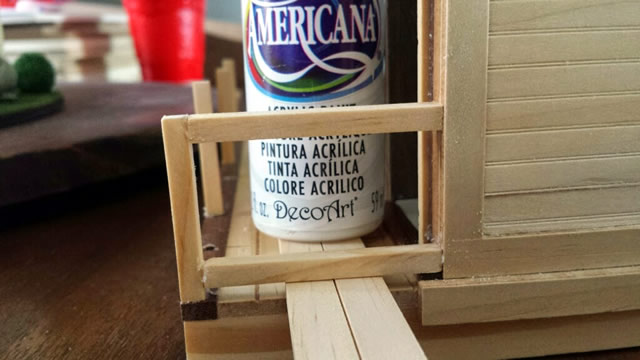
Remember Monsieur M? He’s the guy that gave me the Prototype kit to test out for him. Well, looks like he’s at it again…building yet another DIY dollhouse kit that makes me scream “I want!”
The main concept (Monsieur, feel free to comment/correct/yell at me if I got this wrong) of the kit is to basically build it using a stick framework. It’s the same concept builders use to construct our real-life homes — you create the framework, set it up, then start adding the plastic sheeting, insulation, drywall, etc. This is a pretty refreshing approach to building dollhouses if you ask me — most dollhouses you see in the market today are mostly made up of solid panels you connect to build the walls.
What’s even more awesome about this kit? From what I’ve read in Monsieur’s blog (definitely check it out folks), because each wall is basically a frame made of rods/plans (which is then covered with matboard as the “drywall”), you can literally create your own door/window openings anywhere. So long as you carefully mark where on the matboard/drywall where you want the openings to be, you simply configure the framework to accommodate your window(s) and/or door(s). Monsieur’s most recent entry gives a much better explanation on how to go about doing this — with photos to boot (and salivate over).
At the moment, Monsieur has shown how the kit should be assembled and how to do the openings. Curious what he has in store in terms of decorating it. The fact he used matboard for the interior/exterior walls, would love to find out what it can handle besides wallpaper and siding.
So if you’re reading this Monsieur — if you have a waiting list of customers wanting to buy this kit…you can put my name in the ranks. Until BK and I find a new place (I really need a place to work and store my minis)…I have to resort to working with the smaller kits. And you’re seriously killing me with this masterpiece of yours.
Easter weekend came and went. Granted, the Easter bunny didn’t come by and left me gifts of confectionery awesomeness. But at least BK and I got to spend Sunday with my family for some serious Pinoy-style celebrations: a kickass brunch of tasty proportions (cuz my parents roll like that), coupled with a health dose of chismis and kuwento (the Tagalog term for “gossip” and “stories” respectively). Even though my family’s literally 45 minutes away, it is nice to hear BK say how much he enjoys seeing my family. Then again, my mother did serve ham, and there’s no way my husband was going to turn down that porky goodness.
Along with stuffing our faces silly, I am pretty proud to report that I actually got back to building dollhouses again. Okay, so I spent the last three weeks sanding and prepping the pieces. But when it came to actual construction (officially around April 1st), I was rather amazed at how quickly things came together.
So a bit of background is in order. Remember how I got the Glencroft in December? Well, as excited as I was receiving it, there was also anxiety. Up until then, most of the dollhouses I’ve handled were either made of 3/8″ (or 10mm) thick wood or MDF. The Glencroft is manufactured by Greenleaf/Corona Concepts dollhouses — and this company makes dollhouses using 1/8″ thick plywood instead. Basically, this meant that the kit I attained was made of thinner stuff. And my friends will tell you, I’m not exactly a pro when it comes to handling delicate stuff.
So rather than peeing in my pants and agonizing at the possibility of my destroying the Glencroft during construction, BK suggested that I do a test run on another Greenleaf kit. Something smaller, and something that won’t break the bank in case I screw it up.
Enter the Primrose.
Not only is it very affordable ($15/kit – bought two just for the heck of it), but the shape is pretty basic — a simple two story cottage with a roomy first floor and a workable second floor. I thought it was cute and all, but then when I checked out Greenleaf’s forum gallery – I was utterly amazed at the creative ways the members modified their Primrose kits. My favorite rendition was done by fellow Greenleaf forum member Minis on the Edge – just seeing the adjustments she made to make her kit look like a rustic two story cottage made me want to try my hand at it.
But as you all know, just because you see something you want to try — actually doing it is an altogether matter. So before I could try my hand at it, decided to draft my gameplan.
Since I bought two Primrose kits, I knew the challenge was to basically make the kit taller than the original design. The only way to do that was to basically add height to the front and side panels. The first floor was already designed to have 8″ ceiling height, but the second floor was roughly about….maybe 6-7 inches tall if you measure the gables. But that’s not pretty realistic — in a real house, you want the pitched roof and gable to be way above your head. In this case, I had to figure out how to make the second floor be the same height as the first.
The good news was that the solution was simple — it basically consisted of taking the side panels on both kits, cutting them up and splicing them together to create taller panels. I didn’t take photos of the actual process (since I was spending evenings cutting each panel apart with a craft knife), but hopefully this Illustrator diagram will help.
In short, I took the side panels from Kit A and cut off the gable parts (which left me with a rectangle each), while from Kit B, I cut off the top 35% of the panel. But because the wood panels were 1/8″ thin, gluing the panels together didn’t guarantee that they pieces would be flush. So to make sure everything was square/level/flush, I glued the pieces on a 3mm thick sheet of cellfoam. After covering it with wax paper and stacking a ton of BK’s boring dense hardcover books (thanks hun!) to flatten the merge panels, I cut out the new shape. And voila, two new taller side panels.
Once the sides were created, the rest of the construction was straightforward. Because the Primrose was a tab-and-slot assembly, it was a matter of making sure the pieces were sanded enough to fit at the necessary slots/tabs.
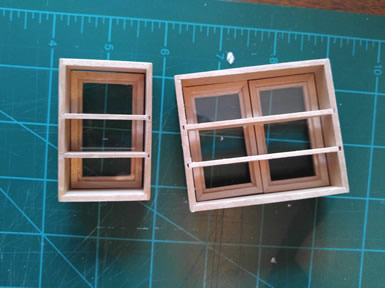
I also ended up cutting the original door and window openings to bigger sizes in order to use plastic windows I bought online. Unfortunately, these new components required a thicker insert — which was easily solved (yay!) by gluing a layer of cellfoam wherever it was needed. Probably a good thing in the long run — it basically made the overall structure more stable (and less likely to keel over).
Once I got the doors and windows done, decided to just go for broke and even cut an opening on the roof for a dormer. At this point, the second floor was tall enough to be a room. So why not throw a dormer window for gusto you know?
By 9 pm April 1st, I was officially done with constructing the main shell of the house. Again, I did spend the weeks prior to Easter weekend sanding each piece from both kits. But after doing the run, can definitely understand why my fellow Greenleaf forum compatriots enjoy building these kits. They are indeed flexible when it comes to customizing, and with the wood being thin, it was easy to widen or create new openings for doors and windows.
Overall, I’m liking it. But again, have to see how this turns out before I even begin to attempt the Glencroft.
…am really sorry folks for yet another late post. I did promise to be better at writing my chronicles. But the last couple of weeks have been pretty taxing here in the real world. For starters, two weeks after I completed the Prototype Kit, my work world was turned upside down when a close coworker in my department suddenly passed away. It was devastating for all of us who worked with her — we all basically interacted with her that day. But I think it was even worse for my bosses, who were with her when she had the heart attack, and watched her be taken away to the hospital. Only to find out the next morning that she sadly didn’t pull through.
I was working remotely on the day the news broke out. Another coworker called my cell and tearfully told me the news. Oddly, I don’t remember much of that day — think most of the time I just did what I could at home. But it wasn’t until I returned to the office the following day, and seeing her cube did it finally hit me. And it pretty much was a struggle after that until the day of the funeral.
Not gonna lie – it’s still difficult coming to work. I always have to walk past her cube to get to mine, and while her station has been recently cleared and prepped for a temp, think many of us are still expecting her to come in from perhaps her recent trip to Jamaica or North Carolina. And probably raising a fuss as to why her stuff got moved around. Heck, there are times I sit at my desk and expect to smell the cinnamon tea she always brews for her breakfast and afternoon snack. So yes, it will pass…but right now, guess it’s one step at a time.
I know most folks will say that it will take time. But it’s funny how odd that sounds when you’re in a position of needing to grieve while needing to move on. Especially at work. And while the organization as a whole have been kind in holding back projects while my department gets back on its feet, it’s obvious that we need to keep going.
So again, thank you everyone who have been patient and provided support in the last couple of weeks. Most of you tend to roll your eyes and say it’s nothing. But seriously, thank you for everything.
In terms of minis, I did managed (and often forced) to do some work . After the prototype, I wanted to try my hand at kitbashing the Primrose dollhouse kit. But with what happened at work, I knew I wouldn’t be in the right state of mind to tackle such a task. So to help me pass the time, I shuttled between just prepping the pieces for the kitbash, decorating some of my existing houses/displays, and purchasing some new items (sssh, don’t tell BK). I’ll get the posts about them soon.
Again, thanks again, and (hopefully)….I am back.
Found this very tasty discovery from StudioSeven’s blog Mini*Aesthetics. I will confess that I am sorely tempted to risk upsetting my husband. Granted, he’s been very encouraging in terms of my hobby/crazy obsession. But like any human, he has his limits.But seriously, this is tempting!
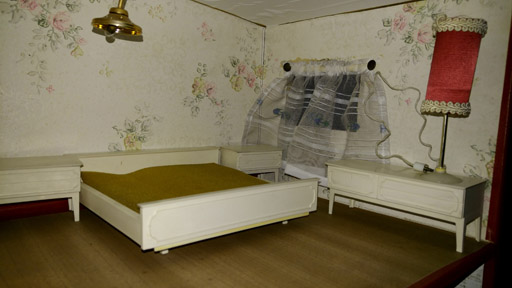
Apparently Chiasso.com is selling the Dylan House from Brinca Dada. And am willing to bet specific body parts, many a modern mini fan probably has a house (or more) from Brinca Dada in their ultimate wish list. Granted, their houses are more of the 1:16 scale and “supposedly” designed for kids. But many fans know the idea of letting little fingers playing with these beauties is almost to the point of sacrilege. Let’s face — it’s too pretty.
Usually these houses can go in the hundreds depending on the vendor. But Chiasso is offering the Dylan house for the lovely price of — $98. Can we say score? Why, yes, yes we can. Downside though — there’s only two left in stock.
Emotionally and mentally, I want this. I want it so bad that I have my wallet in front of my keyboard, and my credit card peeking out of it oh so slightly. As if tempting me to whip out its plasticky power and claim this house as my own. On the flip side, my brain’s threatening me with more than bodily harm if I go through with it. And the fact I’m gonna be feeling guilty because I will have to tell BK about why there’s a package at our apartment door.
Telling you — I need to win the lottery.
This is seriously way overdue. I had the draft written and ready to go on this blog, but things at work pretty much kept me away. I literally had to wait till the holiday weekend to sit down and finally get it out.
I promised Monsieur M to provide a type of feedback on the whole experience with the prototype kit. So if you’re reading this Monsieur, hopefully this helps. I scribbled down what I could during the building process, and honestly, was having a bit of a challenge figuring out my chicken scratch amidst the splattered glue, and sawdust…
The Good
- Easy assembly = the fact the kit had less than 10 pieces AND the pieces were pretty obvious made assembly rather foolproof. Or in my case, “idiot-proof”. Definitely something for the novice miniaturist to get started.
- Items were clearly labeled = Monsieur M was very kind to indicate which sides of the pieces should be attached to another via marking the areas in red. Again, thank you for making it more idiot-proof for me.
- Quality of materials = I loved how the walls and floor were basically a wood framework that’s covered in cardboard-like material (poster board?). Reminds me of how in real houses there’s the drywall covering the actual frame. Again, I didn’t have to sand or cut anything – everything was precisely cut so you literally start assembling from the package. Also love how the support beams for the main room and attic didn’t require sanding and even the pegs used to connect the pieces were on the money. According to Monsieur M, he did dry runs to make sure they fit each time. Think for folks who’ve always had to sand or trim their dollhouse parts to size, this kit would be treat.
- Good size for rooms = upon assembly, the main room measures 8″ wide x 6″ deep x 10″ high. Yes, this means you can’t put a whole living room or bedroom suite in it. But this is a great option for mini fans who maybe just want to showcase a particular piece of furniture (or you just want something that won’t take up much space).
- Economical = because of its size, you don’t really have to spend much in terms of components. Most of the components I used were items I already purchased awhile back and were in storage. The only things I really needed to buy was the single window. So this gives me an excuse to splurge on things like the hardwood flooring and shutters.
Observations (these aren’t negative comments — just more like observations and/or possible suggestions)
- Not much flexibility to bash = I got the initial impression that there weren’t really alot wiggle room with kit when it comes to changing its original structure. Granted, I probably could have explored it further but I couldn’t imagine being able to move the walls around to a different orientation, or maybe move the support beams from the left side of the kit to the right side. Because of the grooves where the pieces needed to be glued (or where the holes were located on the floor/ceiling pieces to accommodate the support beams), I could only build the kit in its original format.
Also, because of the way the walls were built, I wasn’t quite sure if I could for example widen the window opening or even cut another opening in the wall to accommodate a door. Was a little fearful that if I start cutting up openings, that I might cut out parts of the framework (and therefore ruin the structural integrity of the kit). If that had happened, not sure what I could do short of ripping out the cardboard “drywall” and jerry rigging the framework to make it sound once more.
Another challenge was the second floor — because of the shape of the side wall and the roof it supported, the overall height of the second floor was low. If I wanted to raise the height of the room to accommodate a more functional living space, I’d have to add height to the side wall and probably rebuild a new roof to accommodate the new piece. But again, think that have a big impact of the kit’s intended structure.
- Thickness of the walls = the original kit walls were designed to be about 1/2″ thick. Basically this meant that for the window needed in the kit, I could only use one that had a 1/2″ insert. It was a bit of a pain in the butt to purchase such a window at my local miniature shop — most of them carry components designed for 3/8″ thick walls. So I had no choice but to order the window online. I’ll have to check with Monsieur M if it’s possible to build out the framework/walls to be 3/8″ thick instead. Part of me wonders if the current thickness of the kit walls was because using thicker woods provides better
structural support.
Recommendations/Suggestions (aka my wishful thinking)
- Giving users the option to build their own framework = yes, this suggestion is not for the novice builder. But it would give the more seasoned fans an opportunity to customize the framework that will make up the walls of their display kit. Plus this might solve the issue of folks like me who might want a bigger opening to accommodate a bay window. Or maybe having a door.
- Increase the height of the second floor = don’t get me wrong folks. I love how the kit gave me an attic area to decorate. But it’d be pretty nice to be given the option to adjusting the height of the room to make it a livable space.
- Explore different ways to label parts = like I said earlier, am very thankful for Monsieur M taking the time to indicate where pieces go by writing in red pen on the parts. But if Monsieur is thinking of making this kit available, coming up with a different labeling system might be a good idea. Plus, it’d be useful to label what sides needs to be facing what during assembly. Granted, most miniaturists will recommend during a dry fit before pulling out the glues. But for novice buiders, they might opt to skip this step.
- Deeper grooves on areas where parts are glued together = in the prototype, you attach pieces together either via pegs/holes, and gluing parts together. For the latter, Monsieur M. built the parts to have a type of “groove” or channel where you apply the glue and attach the correct pieces. Good news about that feature are that it helps keep the parts square while the glue dries; the second part is that the groove keeps the glue in between the glued parts. But if there’s a way for Monsieur M to make those channels/grooves deeper (probably by another 1/16″ to 1/8″), that would at least ensure that glue won’t squeeze out between the parts (again, this is geared more to novices).
Overall though = I love the kit. I love how quickly it could be put together, and frankly, I found it more enjoyable to build something and only decorate it with a few key pieces. Plus, because I live in an apartment, I could display the kit anywhere I want to (and not hog up space). If this became available for public purchase, I’d totally buy it. :)
Since I’m basically writing this after the fact…but am pretty happy to report that as of February 5th….the Prototype Kit is complete. At least that’s how BK and I saw it. Looking back at my notes, I realized that if I hadn’t been interrupted with stuff at work and at home….I could have finished the kit in literally a week. Instead, the project stretched into months as I had to scramble to find time to work on it. Decided to merge Day 5 & 6 into a single entry mostly because I managed to actually work on the kit during the weekend. Granted, not my entire weekend, but big pockets of time nonetheless.
(Note to self: buy lotto tickets. And pray that you win big so you can either work part time or retire early. Preferably latter so there’s more time for your hobbies! Oh yeah, and your husband too!)
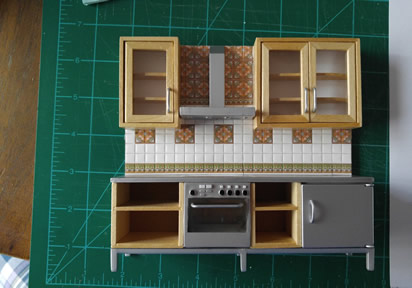
On Saturday morning, I ended up switching the brass knobs on the cabinet doors. They looked okay, but because the stove had silver handles, thought it looked too weird. Had initially thought of maybe getting new hardware online, but passed out at how much they’d cost. Plus, I wasn’t in the mood to really pay for internationally shipping (note to miniature retailers: maybe looking into offering imported minis from Europe might be a good idea. You will get business from crackpots like me if you do!).
Then it hit me — I had a ton of map pins in my desk drawer. Could I use them as the new knobs instead? After wasting two pins, figured out how to cut the pins down to size, and press/glue them into the cabinet doors. Tada! New and cute knobs!
After that little stint, BK and I went out to meet some friends for dim sum (yay!), followed by errands. When we got home, my husband discovered a package had arrived for me. Talk about good timing — they were stuff for the cabinets!
I bought these awhile back via eBay through a UK vendor that carried 1:12 scale ceramics on the cheap. Granted, the shipping was so-so, but again, so long as you order a good amount, it balances out. I wanted everything to be in green to compliment the white cabinets and blue walls. Alas, the vendor ran out of the green color for the mini gravy boat….so had to make do with the mustard yellow. Was pretty bummed by it, but after seeing it in person…it’s quite adorable! In fact, they were so adorable….I completely forgot to help BK unpack the groceries as I started trying out ways to arrange the chinaware onto the cabinets. Luckily, we didn’t purchase alot and BK didn’t mind putting them away (whew!).
Once I figured out how I wanted to arrange them, I started to apply some tacky wax on the dishes to temporarily hold them in place. Given my stubby fingers, I had to dig around for a pair of tweezers in order to put them in place.
Once the ceramics were in place, I then added some accessories in my collection to round out the rest. Among them is the pie you see on the left side of the photo — my best girlfriend Jay’s younger sister K actually made it (along with a couple of more pies) for me as a birthday present. Jay provided beer bottle caps for the pie tin while K made the pie using clay and paints. I was so touched by the gesture, that to this day, I guard these pies as one of my most prized miniatures.
Meanwhile, the two ceramics and platter above the cabinets I had to resort to using a cool glue gun to keep them in place. The other items on the counter and stove were actually minis I found on clearance at AC Moore years ago. So by the end of Saturday, the kitchen was complete!
On Sunday, I didn’t get to work on the kit till almost evening. BK woke up not feeling well, so had to finish the remaining errands that day without him. By the time I was done, it was around 6 pm — and SuperBowl was starting. So while BK was on the couch watching the game (being from Massachusetts, he’s rooting for the Patriots), I was at my desk trying out some items to decorate the attic.
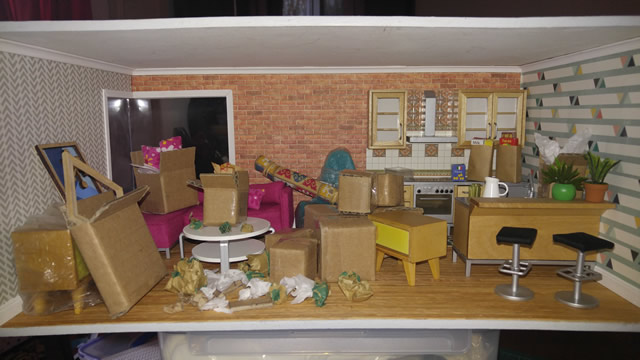
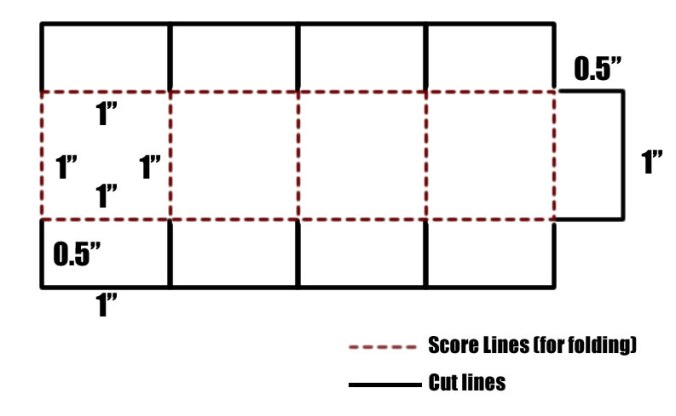
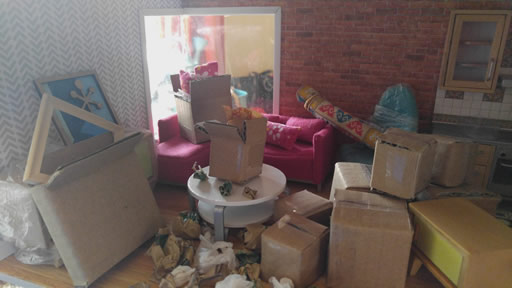
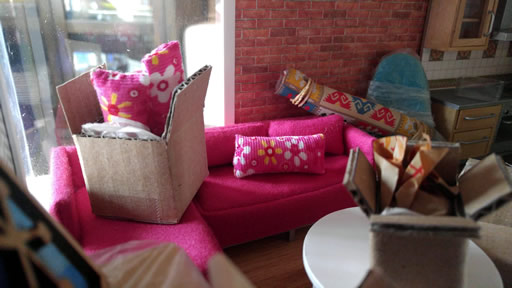
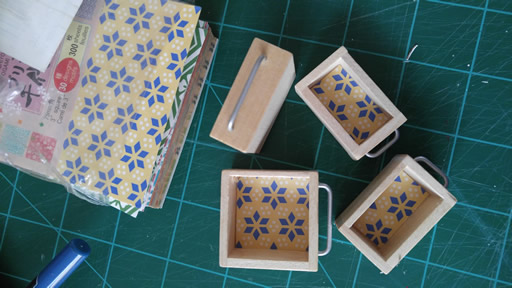
Since the attic was relatively small (it looks more like a crawl space if anything), I was imaging it to be more of a storage depot for boxes and random junk. When I did a search on tutorials on how to make boxes (or at least patterns I could use), I came across sites that provided printables of miniatures you can print, cut, and glue to make 3D items.
Had to admit, was a bit skeptical until I saw this tutorial to make a tote box with a lid — it was literally a scaled down version of those file boxes we see at work. The instructions advised that you use 110lb cardstock. I didn’t have such thick cardstock on hand, but I did have 80lb cardstock. So I printed out the patterns, and followed the tutorials. It did involve alot of cutting and creasing and gluing – but hey, I was a DIY bride, and I did exactly the same thing with the invitations. So can’t complain.
Verdict overall? It’s pretty awesome. It took me about 15 minutes to build the first box, but once I figured out where to cut, crease, and fold, the other boxes were an absolute breeze. In fact, I got so excited that I found another mini printable site that offered things like a Victorian chest (with separate liner). I tried a couple of items but some of them didn’t turn out as nice as I thought. For now, I just resorted to assembling more boxes and a chest to make up the bulk of the attic’s contents. Once I assembled the amount I wanted, I threw in some random accessories to complete the scene. Depending on whether I’ll add more, I might end up using hot glue to permanently adhere the items on the floor….
After I added the items in the attic, my husband (now bummed that the Patriots lost to the NY Giants) looked at the kit and said “I think you’re done with the house”. And he was right…think it’s safe to say that the Prototype is done and ready for an occupant!
Monsieur M, if you are reading this — thank you so much for giving me the chance to build your kit! Hoping in the next few days, I’ll get another post up about my findings regarding this kit. Overall, I really enjoyed this kit and would be open to buying more for future projects!
In the meantime though…it’s almost midnight, and I need to get some sleep before hauling my butt at 5:30 am for work. But now, I can sleep knowing this project is complete, and I can move one of my dolls into it immediately! Success!